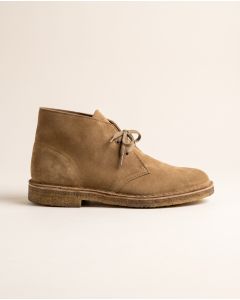
A new pair of leather boots is stiff. That stiffness is what you want: it means the upper is thick, the structure is firm, and the boot will mould to your foot over the next few weeks. Done properly, breaking them in takes about two weeks and should not involve blisters.
Start with the right size
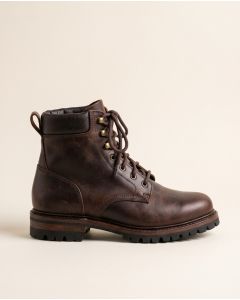
Pain at the start is rarely a break-in problem; it is a size problem. Measure your foot length in the evening, compare it with the size guide, and check the product page for fit notes. Kastrup boots follow EU sizing. If you are between sizes, take the larger one and wear a thicker sock. The Lug-Sole Leather Boot, for example, is best a half size up if you wear it with wool socks.
A boot should hold your heel with a little lift in the first days, and give your toes room to move. If your toes touch the end, or the heel slips heavily, exchange it. Size exchanges are free within 30 days, provided the boots have only been worn indoors on a clean surface.
The two-week routine
Days 1 to 3: indoors
Wear the boots at home for an hour or two with the socks you plan to wear. This is also a chance to find pressure points while you can still exchange them.
Days 4 to 7: short outings
Wear them for short errands, a few hours at a time, then switch to other shoes. Do not plan a long walk in the first week.
Days 8 to 14: longer days
Extend the wear to half days, then full days. By the end of the second week most boots have softened at the ankle and flexed at the ball of the foot.
Helping the leather along
- **Thicker socks.** Wool socks add padding and fill small gaps. Take care that the boot is not too tight with them.
- **A little warmth.** Wear the boots with thick socks for ten minutes at home and let the leather warm and stretch around your foot. Do not use a hairdryer.
- **Condition the leather.** Rub a neutral leather balm into the upper with a soft cloth. It makes the leather supple, and we suggest doing this twice a year anyway.
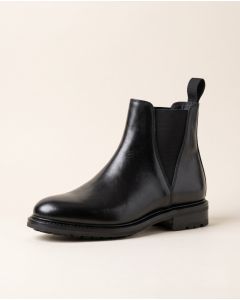
- **Mind the hot spots.** At the heel, a blister plaster or a pad on the inside of the boot prevents rubbing. At the ankle, leave the Chelsea elastic to ease: the gussets relax after a few wears.
What not to do
- Do not soak the boots, or wear them wet in the rain to stretch them. Water damages leather and can weaken the glue.
- Do not skip the short-wear phase to save time.
- Do not leave them by a radiator to dry. Stuff them with newspaper and let them dry slowly at room temperature.
Keep them going
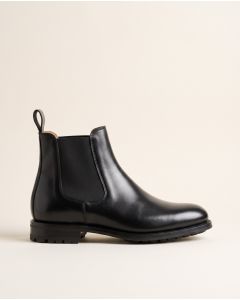
Brush off dirt, use shoe trees overnight to hold the shape and absorb moisture, and alternate pairs so each rests for a day. The Kastrup Leather Chelsea Boot (from $185 for women, $215 for men) is Goodyear-welted, so a cobbler can replace the sole when it wears, which is how a boot lasts ten years rather than two.
If a boot still hurts after two weeks of careful wear, write to care@nordwell.example. Our team can advise on fit before you decide to exchange. Our size guide has the full foot-length table.