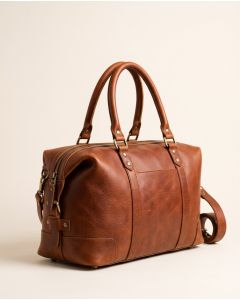
Marlowe makes leather bags, wallets and belts. The brand is designed in Amsterdam and made with small partner workshops in Italy, Portugal and Spain, where the work is done by a few people with hand tools and a lot of patience. Here is how a piece comes together.
It starts with the hide
Marlowe uses full-grain vegetable-tanned leather. Full grain means the top surface of the hide is kept as it grew, with its natural variations, rather than sanded away and printed with an artificial grain. Vegetable tanning uses tannins from bark rather than chromium salts. It takes weeks rather than days, and it gives a firm, dense leather that darkens and takes on a patina as you use it.
Every hide is different. Marks and variations in grain are not defects, but the character of a natural material.
Cutting by hand
A cutter inspects the hide and plans the pieces so that the best, most even areas go to the parts that show: the front panel of a tote, the flap of a wallet. Areas with stretch or marks go to hidden parts, or are not used. This wastes less leather and is the reason two bags are never exactly alike.
Stitching and edges
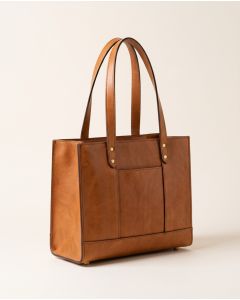
Panels are skived, which means thinned at the seams so they fold cleanly, and stitched with waxed thread. The Structured Leather Tote ($285) holds an upright shape from day one because of its density, and the interior is kept simple with a single zip pocket.
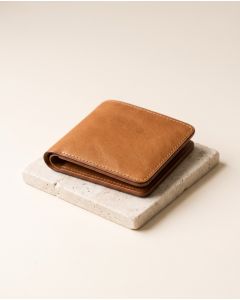
The edges are where a good bag can be told from an average one. Marlowe edges are sanded, painted by hand in three coats and burnished, so they do not fray or peel. On a wallet like the Leather Bifold ($95), burnished edges are sealed by hand, which allows nine millimetres of folded leather to remain slim.
Brass and hardware
Feet, buckles and clasps are solid brass rather than plated steel, because plating flakes and brass ages. On the tote, solid brass feet protect the base, and a magnetic closure keeps the top neat. Brass will darken and gain its own patina alongside the leather.
Finishing and testing
Each piece is checked for stitch tension and edge finish, then conditioned with a natural wax. A strap is loaded to check the stitching, a zip is run a few hundred times, and the shape is checked before packing.
What to expect when you own one
- **The first weeks:** the leather is stiff and a little pale. It will soften.
- **After six months:** noticeably darker, with fine creases and a warm glow where you touch it.
- **After years:** a shape and colour that is yours alone.
To keep it that way: wipe with a dry cloth, avoid soaking, and condition with a leather balm two or three times a year. If a bag gets wet, blot it and let it dry at room temperature, never near a radiator. Our care guide has the full steps.
Where to start
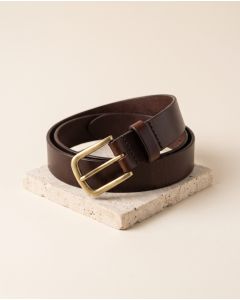
- A first piece: the Slim Leather Cardholder ($49), or the Classic Leather Dress Belt ($79).
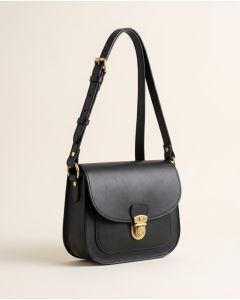
- An everyday bag: the Leather Crossbody Bag ($195).
- A piece to keep for years: the Leather Weekender Bag ($389).
The Marlowe collection shows the full range.